Lord Shiva Tattoo Designs: Meanings and Placement Ideas
Key takeaways
- Each element of a Shiva tattoo — third eye, trishul, damru, moon, snake — has its own meaning.
- Realistic portraits need space; minimal symbols work at small sizes.
- Forearm, upper arm, chest and upper back are common respectful placements.
- Plan the face direction and posture so the deity sits upright in your natural stance.
On this page
A Shiva tattoo is one of the most powerful spiritual designs you can wear. Lord Shiva — often called Mahadev — represents transformation, inner strength and meditation, and every element in his imagery, from the third eye to the trishul, carries its own meaning.
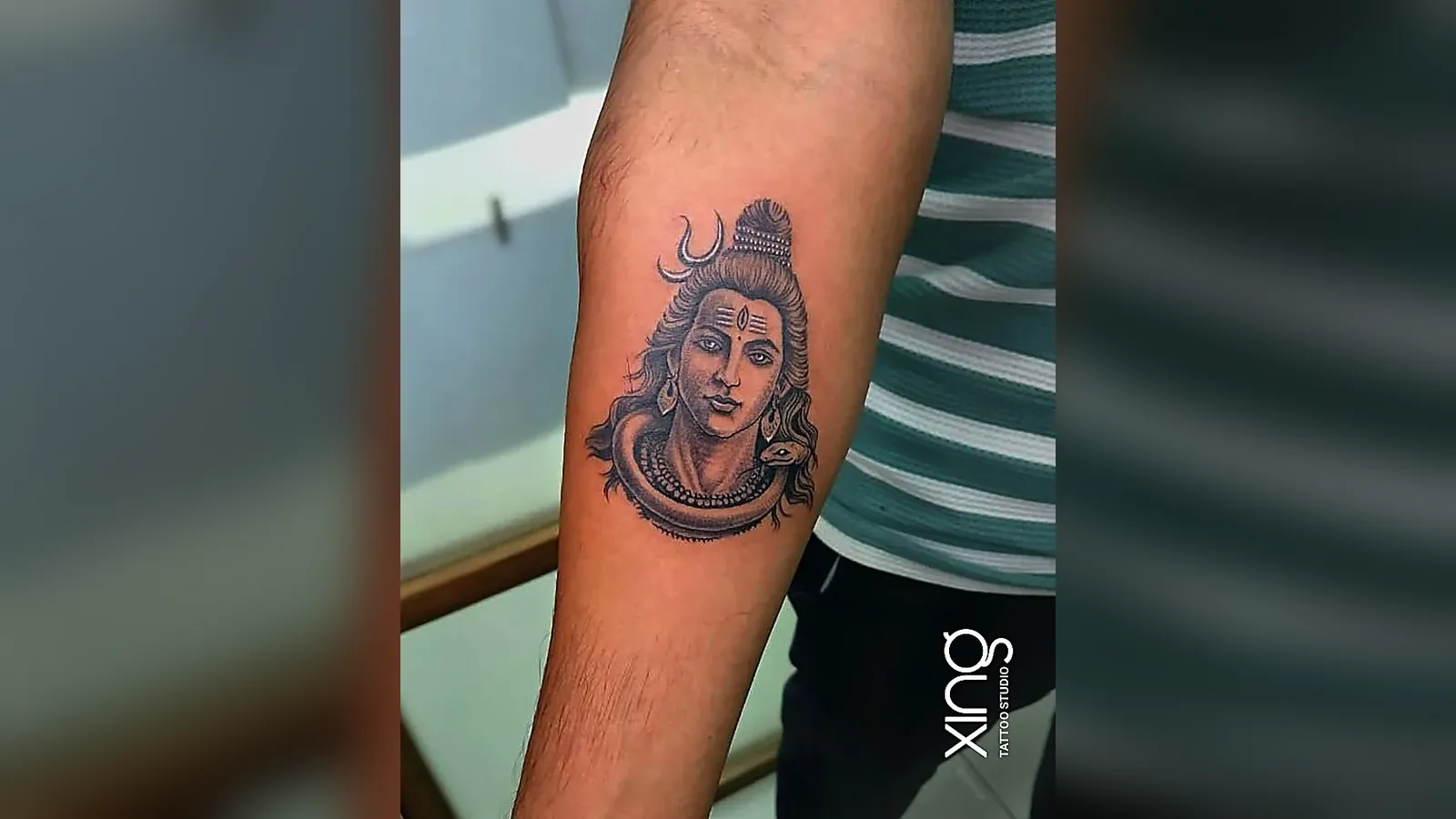
Shiva designs are among the most requested at our studio in Brookefield, Bengaluru. Some clients want a detailed, realistic face; others prefer a minimal trishul with a damru.
Here's a guide to the symbolism, styles and placements.
Symbolism of a Shiva tattoo
Understanding each element helps you choose a design that reflects your own beliefs.
| Element | Common meaning |
|---|---|
| Third eye | Insight, awareness, destruction of ignorance |
| Trishul (trident) | Creation, preservation and destruction; balance of forces |
| Damru (drum) | The rhythm of creation and sound of the universe |
| Crescent moon | Calm, time and mastery over the mind |
| Snake (Vasuki) | Control over fear and ego |
| Rudraksha beads | Devotion and spiritual practice |
| Ganga in the hair | Purity and the flow of life |
| Matted locks (jata) | Asceticism and renunciation |
| Nandi | Devotion and patience |
Many people combine several elements into one design. Others choose a single symbol that speaks to them.
Realistic Shiva portrait styles
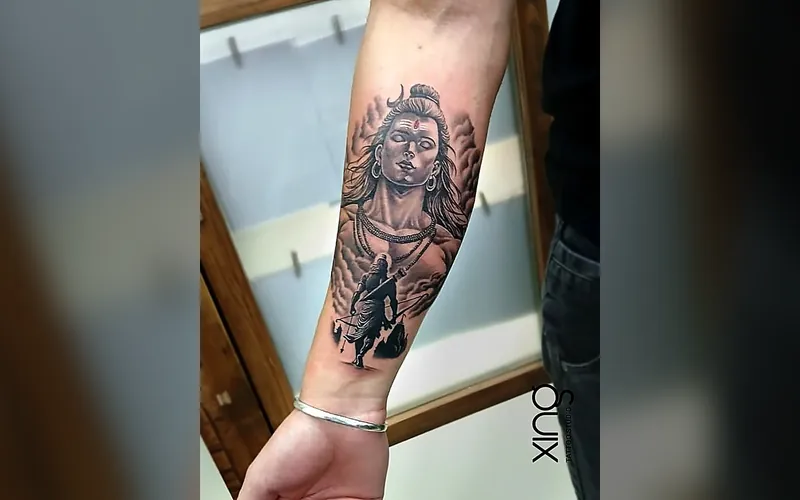
Realistic Shiva tattoos are detailed, dramatic and deeply devotional.
Popular realistic styles:
- Meditating Shiva — calm, eyes closed, often with mountains or clouds.
- Intense Shiva — eyes open, powerful expression.
- Ardhanarishvara — half Shiva, half Parvati, representing balance.
- Shiva with trishul and damru — a full composition.
- Statue-style Shiva — inspired by temple sculptures.
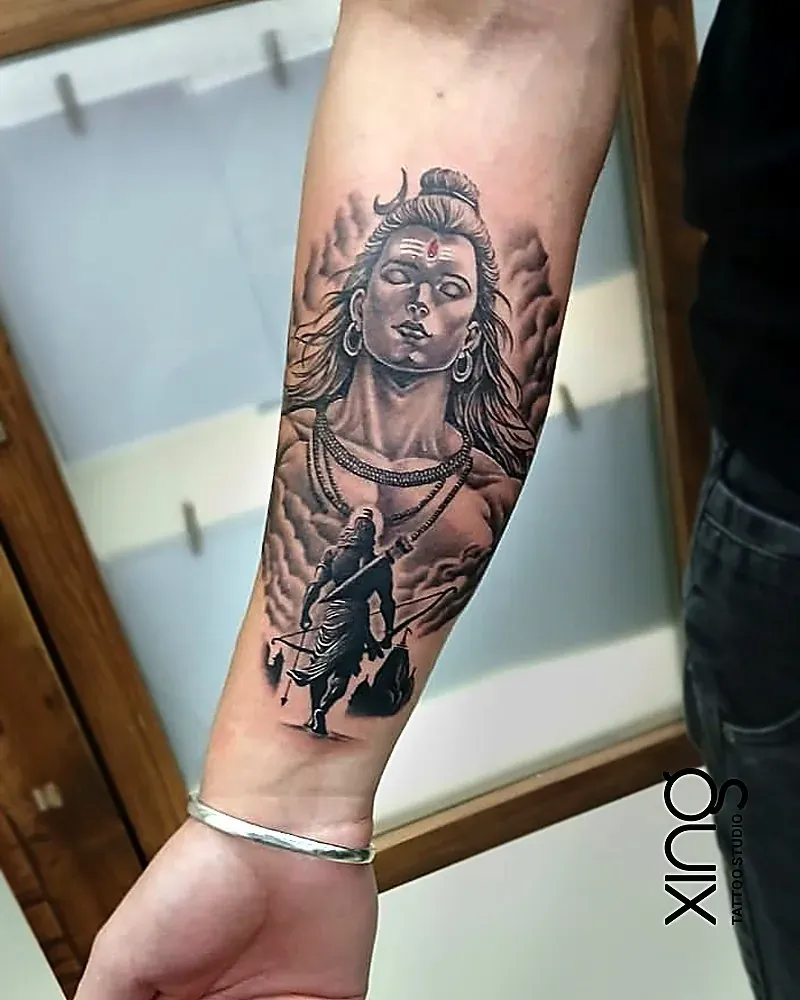
Realistic portraits need size. The eyes, ornaments and hair need room to stay clear as the tattoo ages. Our realism tattoo guide explains why contrast and size matter so much.
Minimal Shiva symbols
Not everyone wants a large portrait. Minimal designs can be just as meaningful.
- Trishul with damru — the most popular minimal Mahadev tattoo design.
- Third eye — a simple, striking symbol.
- Crescent moon with a small trishul.
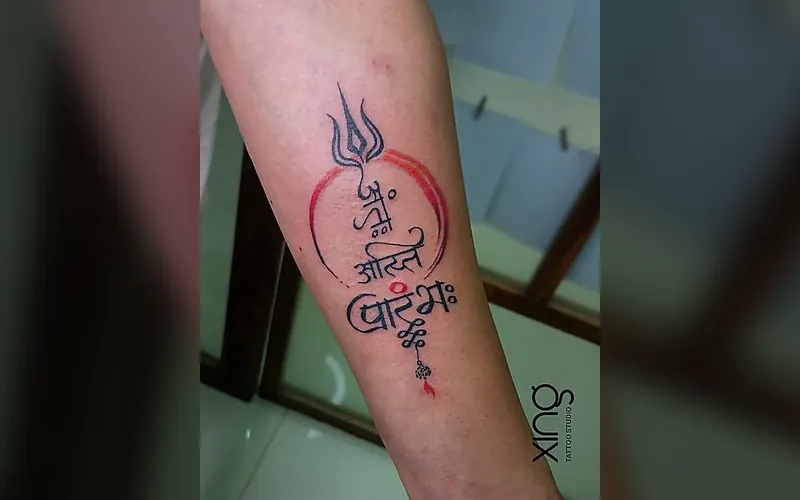
- Om with trishul — combining two sacred symbols.
- Rudraksha bead — a subtle sign of devotion.
- "Har Har Mahadev" or "Om Namah Shivaya" in Devanagari script.
These work well on the wrist, forearm, back of the neck or along the spine.
Choosing between realistic and minimal
| Realistic Shiva | Minimal Shiva symbol | |
|---|---|---|
| Size | Palm-sized to sleeve | Small to medium |
| Session time | Long, sometimes several sessions | Usually one short session |
| Visibility | Bold, eye-catching | Subtle |
| Ageing | Needs strong contrast | Ages well with good linework |
| Best placements | Forearm, chest, upper arm, back | Wrist, forearm, neck, spine |
Placement ideas
Respectful placement is important for any deity tattoo.
Popular respectful placements:
- Inner or outer forearm — great for vertical compositions with a trishul.
- Upper arm and shoulder — suits portraits and full figures.
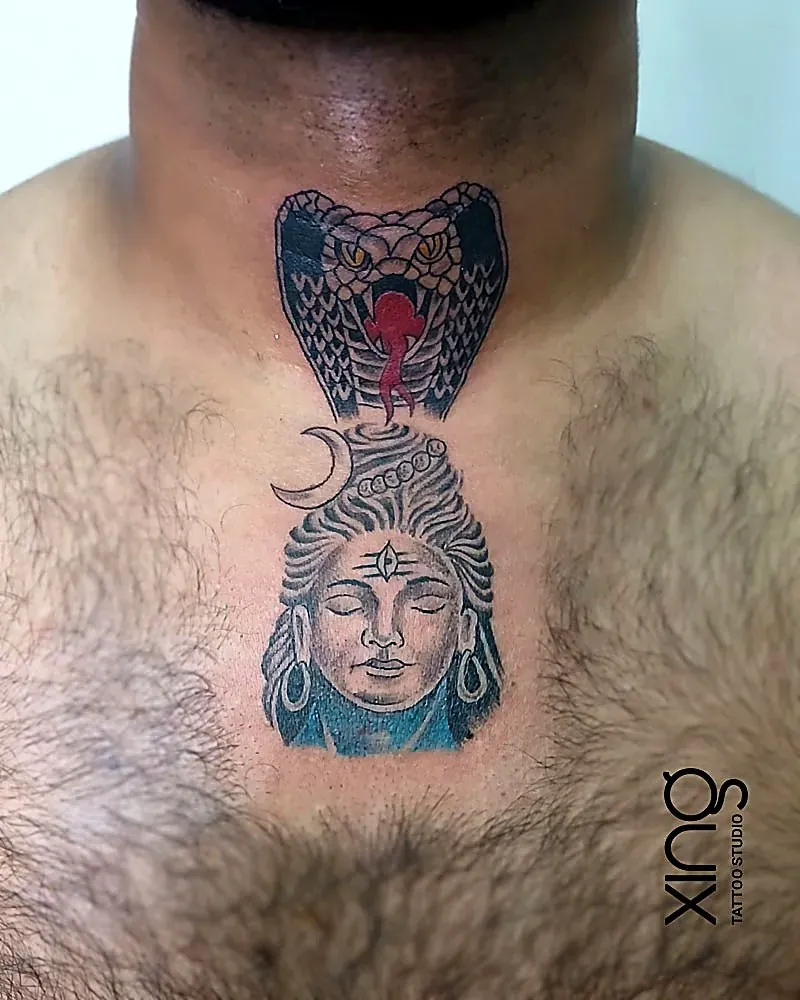
- Chest — a central Shiva face over the heart is a strong devotional choice.
- Upper back — space for large compositions with mountains or Kailash.
- Back of the neck or along the spine — for a trishul or Om.
Often avoided: feet, ankles, lower legs and areas below the waist.
Peace's tip: For a forearm Shiva, think about which way the face should look. Most clients prefer the deity facing up the arm or towards them when their hand rests naturally — it keeps the composition calm and upright.
Respect and etiquette
A Shiva tattoo is a sacred image, so treat it with care:
- Choose your intention. Know why you want this design.
- Get the details right. Symbols, ornaments and posture should reflect tradition.
- Verify any script with a fluent reader before your session.
- Consider family views. Some families have strong feelings about deity tattoos.
- Care for it properly. Keep it clean, healed and protected.
Our broader guide to Indian traditional tattoos covers other deities and symbols, and our Om and Trishul guide focuses on sacred symbols.
Planning your Shiva tattoo
Before your consultation, think about:
- Realistic portrait, full figure or minimal symbol?
- Which elements matter most to you — third eye, trishul, damru, moon, snake?
- Black and grey or colour accents (for example, a blue throat)?
- Placement and size.
- Any text, and its exact spelling.
Bring two or three reference images you like, and let your artist create a custom composition.
Healing and care
Detailed deity portraits involve a lot of shading, so follow aftercare carefully. Wash gently, moisturise lightly, don't pick, and keep it out of the sun while healing. Use sunscreen once healed to keep detail crisp.
Shiva tattoo ideas by size
Small (wrist, behind the ear, back of the neck)
- A trishul with damru.
- The third eye.
- A crescent moon with a single rudraksha bead.
Medium (forearm, upper arm, shoulder)
- Shiva's face in profile with the crescent moon.
- A trishul wrapped in a snake.
- "Om Namah Shivaya" with a trishul.
Large (chest, upper back, half sleeve)
- A meditating Shiva on Mount Kailash.
- Shiva with Ganga flowing from his hair.
- A full figure with trishul, damru and Nandi.
Colour in Shiva tattoos
Most Shiva tattoos are black and grey, which gives a powerful, sculpted look. Some clients add a blue throat (Neelkanth), a red tilak or ash-grey tones for meaning. If you want colour, choose shades that show well on your skin tone and keep the rest in black and grey for contrast.
Shiva tattoos for couples and families
Some couples choose Shiva and Parvati designs, or Ardhanarishvara, as a symbol of partnership and balance. Families sometimes share a small trishul or Om in matching placements. Plan these together so the designs work as a set.
Before your session
Eat a proper meal, sleep well and avoid alcohol the day before. Detailed Shiva portraits can take several hours, so bring water and a snack. Wear clothing that gives easy access to the placement — a sleeveless top for the upper arm, or a loose shirt for the chest or back.
How we do it at Xing
At Xing, Peace draws Shiva tattoos from scratch — from realistic faces to trishul and damru symbols — with respect for the meaning and placement. Spellings for any mantra or phrase are checked before the stencil goes on.
Needles are single-use and opened in front of you, and inks are sealed and skin-tested. See more spiritual work on our Indian traditional tattoo service page.
Conclusion
A Shiva tattoo can be a powerful reminder of strength, transformation and faith. Understand the symbolism, choose a style that suits you, plan a respectful placement and work with an artist who honours the meaning.
If you're planning a Mahadev tattoo design in Bengaluru — whether you're in Brookefield, AECS Layout or Whitefield — bring your ideas for a free consultation.
Ready to talk about your idea? Book a free consultation at Xing on the First Floor of SV Plaza, above DMART Ready, AECS Layout, Brookefield — or WhatsApp us.
Frequently asked questions
Written by
Peace
Lead Artist at Xing, Brookefield, with 15+ years of experience. Every consultation, design and session at the studio is handled by Peace personally.
Meet Peace
Share this guide
WhatsAppKeep reading
Signature Tattoo Services in Brookefield, Bangalore
Custom work by Peace at our AECS Layout studio — serving Brookefield, Marathahalli, Whitefield and East Bengaluru.
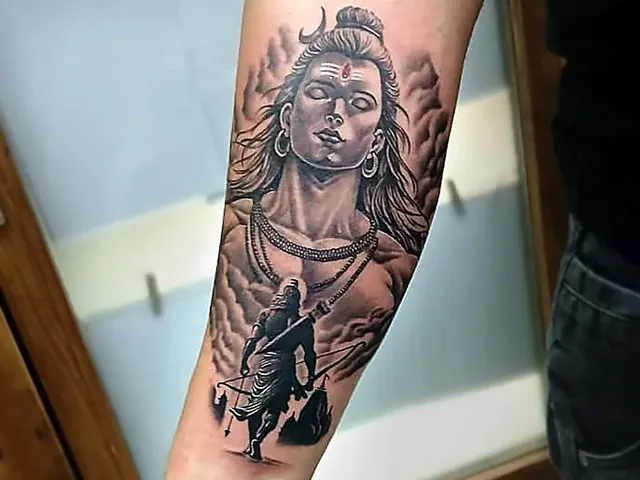
Indian Traditional & Spiritual Tattoos
Explore service Read the guide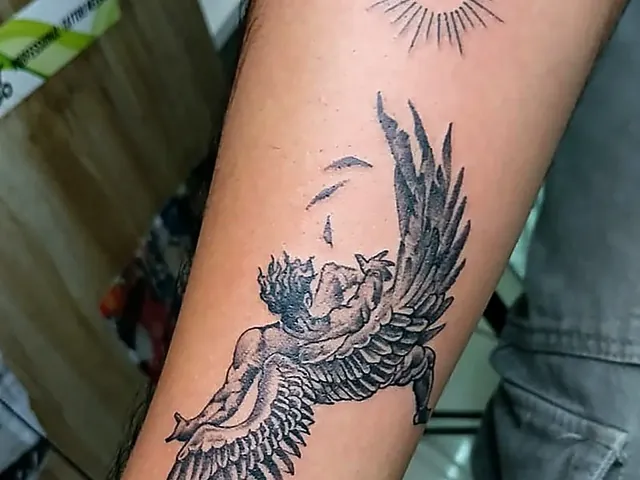
Realism & 3D Tattoos in Brookefield
Explore service Read the guide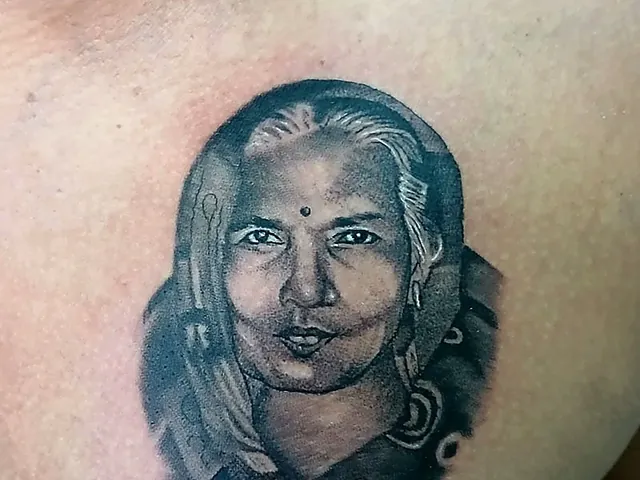
Portrait & Memorial Tattoos, Bangalore
Explore service Read the guide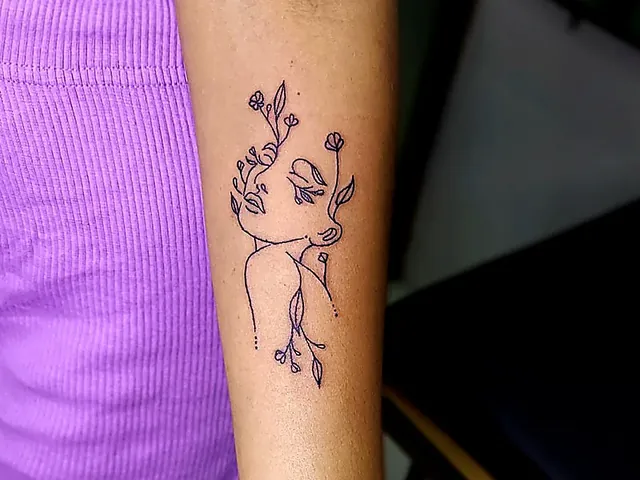
Fine Line & Minimalist Tattoos, AECS Layout
Explore service Read the guide