Indian Tattoo Designs: Shiva, Hanuman, Om and Their Meanings
Key takeaways
- Spiritual tattoos carry deep personal and cultural meaning — plan them with care.
- Lord Shiva, Hanuman, Om, Trishul and Ganesha are among the most requested Indian designs.
- Choose respectful placements, and check every script with a fluent reader.
- A custom design reflects your own faith and story better than a copied image.
On this page
Indian tattoo designs often carry deep spiritual meaning. Lord Shiva represents transformation and inner strength, Hanuman stands for devotion and courage, Om is the sacred sound of the universe, the Trishul symbolises Shiva's power, and Ganesha removes obstacles.
These designs are among the most requested at our studio in Brookefield, Bengaluru. For many clients, they're not just tattoos — they're expressions of faith, family and identity.
This guide explains popular spiritual tattoos in India, what they mean, and how to plan them respectfully.
Why spiritual tattoos matter
A spiritual tattoo can be:
- An act of devotion to a deity you pray to.
- A reminder of strength during difficult times.
- A link to family and the traditions you grew up with.
- A personal symbol of change, protection or peace.
Because of this meaning, spiritual tattoos deserve extra care — in the design, the details and the placement.
Lord Shiva
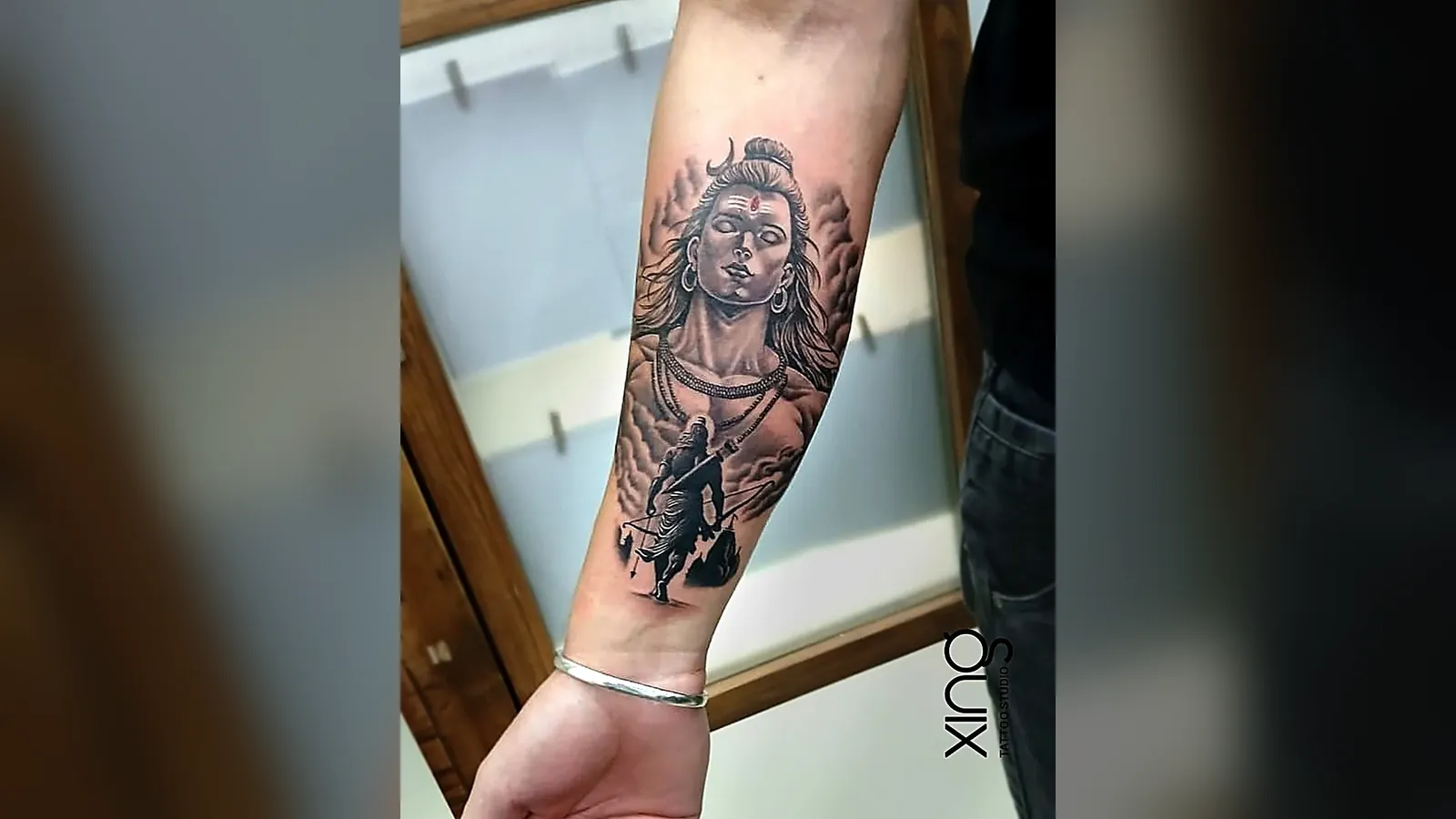
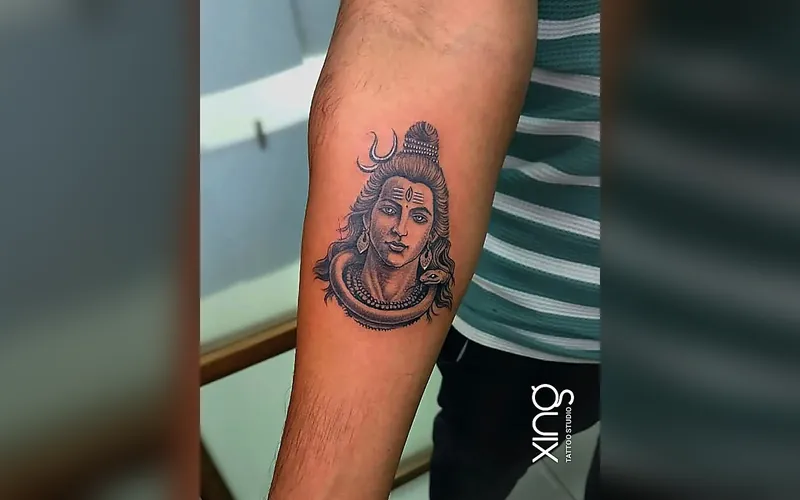
Lord Shiva is one of the most popular Hindu god tattoo choices. He's often seen as the destroyer of ego and illusion, and a symbol of transformation, meditation and inner power.
Common Shiva elements:
- Third eye — insight and higher awareness.
- Trishul — his trident, representing creation, preservation and destruction.
- Damru — the small drum, linked to the rhythm of creation.
- Crescent moon — calm, time and control over the mind.
- Snake around the neck — mastery over fear.
- Rudraksha beads — devotion and spiritual practice.
Shiva tattoos range from detailed realistic portraits to minimal symbols like a trishul with a damru. Our dedicated guide to Lord Shiva tattoo designs goes deeper.
Hanuman
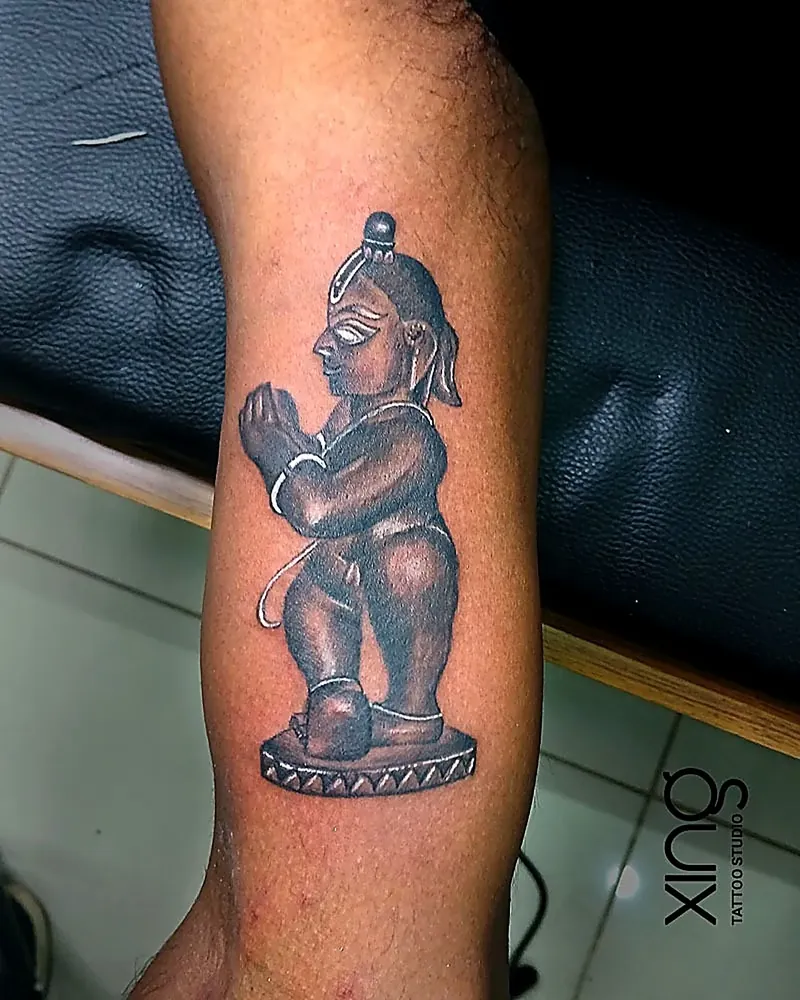
Hanuman is revered for devotion, loyalty, strength and courage. Many people choose a Hanuman tattoo as a symbol of protection and unshakeable faith.
Popular Hanuman designs:
- A realistic or statue-style portrait.
- Hanuman carrying the mountain.
- Hanuman in a kneeling, devotional pose.
- A mace (gada) as a simpler symbol.
- "Jai Shri Ram" or "Jai Hanuman" in Devanagari script.
Om and Trishul
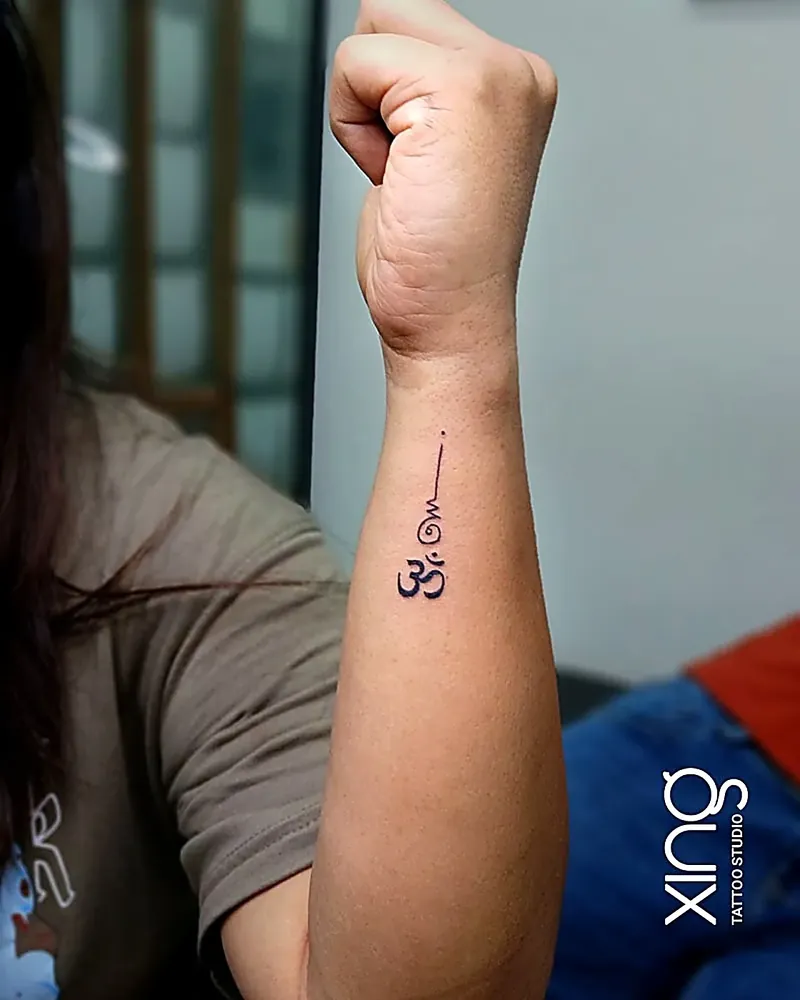
Om is the sacred sound and symbol in Hinduism, Buddhism and Jainism. It represents the essence of the universe and is one of the most widely chosen spiritual tattoos in India. It suits every size, from a tiny wrist tattoo to a detailed piece with mandalas.
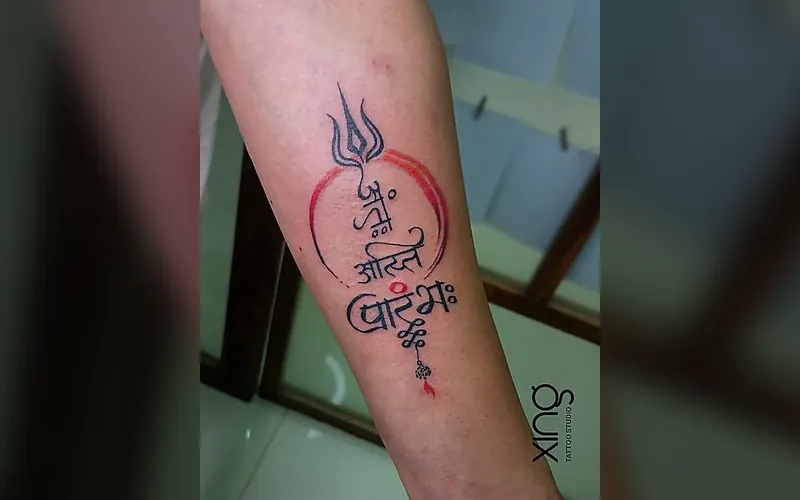
The Trishul is Shiva's trident. It's often tattooed with a damru, rudraksha beads or an Om. It works beautifully along the forearm or spine.
Our guide to Om, Trishul and spiritual tattoos covers design styles and script accuracy in more detail.
Ganesha and other deities
Ganesha is worshipped as the remover of obstacles and the god of new beginnings. Ganesha tattoos are popular for people starting a new chapter — a career, marriage or move.
Other popular choices:
- Lord Krishna — love, playfulness and divine wisdom, often with a flute or peacock feather.
- Goddess Durga or Kali — feminine power and protection.
- Lord Buddha — peace and enlightenment.
- Lotus — purity and spiritual awakening.
- Swastik (the Hindu symbol) — auspiciousness and good fortune; be aware it may be misunderstood outside India.
Indian tattoo designs: meaning at a glance
| Design | Common meaning | Popular placements |
|---|---|---|
| Lord Shiva | Transformation, inner strength | Forearm, chest, upper arm, back |
| Hanuman | Devotion, courage, protection | Forearm, upper arm, back |
| Om | Sacred sound, the universe | Wrist, forearm, back of neck |
| Trishul | Shiva's power and balance | Forearm, spine |
| Ganesha | New beginnings, removing obstacles | Forearm, upper arm, back |
| Krishna | Love, wisdom | Forearm, upper arm |
| Lotus | Purity, awakening | Wrist, ribs, back |
Respectful placement
Placement matters a great deal for spiritual tattoos in India.
Generally considered respectful:
- Forearm and upper arm.
- Chest, especially over the heart.
- Upper back and shoulders.
- Back of the neck.
Often avoided for deities and sacred symbols:
- Feet and ankles.
- Lower legs.
- Areas below the waist.
Beliefs vary between families and communities. If you're unsure, ask an elder or priest you trust. Your artist will also give honest advice.
Peace's tip: For deity tattoos, I always ask about the direction the figure faces and how it will sit when your arm is relaxed. A deity should look composed and upright in your natural posture — never upside down or awkwardly angled.
Custom design vs copying
It's tempting to pick an image from the internet. But a copied design:
- May belong to another artist.
- May not fit your body's shape.
- May include details that don't match your tradition or region.
- Will look the same as thousands of others.
A custom design lets you choose the deity's pose, expression, symbols and style — and makes the tattoo truly yours.
Script accuracy
Many Indian tattoo designs include text — mantras, names or phrases in Sanskrit, Hindi, Kannada, Tamil or other scripts.
- Get the text from a fluent, trusted source.
- Bring it in writing, not just spoken.
- Double-check the meaning of every word.
- Ask your artist to show the stencil so you can confirm every character.
A single wrong stroke can change a word's meaning. It's worth the extra step.
Black and grey or colour for spiritual tattoos?
Most deity tattoos are done in black and grey. It gives a timeless, statue-like quality, suits Indian skin tones and ages gracefully.
Colour can add meaning when it's part of the tradition — Lord Shiva's blue throat, saffron accents, a red tilak or a pink lotus. Many clients choose a mostly black and grey design with one or two meaningful colours.
Planning your consultation
Before you visit, think about:
- Which deity or symbol, and why it matters to you.
- A realistic portrait, a statue-style figure or a simple symbol.
- The size and placement you have in mind.
- Any mantra or text, with exact spelling from a fluent source.
- Reference images you like, so the artist understands the feel you want.
How we do it at Xing
At Xing, Peace draws Shiva, Ganesha, Hanuman, Om, Trishul and Sanskrit script with respect for their meaning and placement. Every design is sketched from scratch, spellings are checked, and we discuss placement with you before the stencil goes on.
Needles are single-use and opened in front of you, and inks are sealed and skin-tested. See more on our Indian traditional tattoo service page.
Conclusion
Indian tattoo designs carry centuries of meaning. Whether you choose Lord Shiva, Hanuman, Om, a Trishul or Ganesha, plan it with care: understand the symbolism, choose a respectful placement, verify every script and work with an artist who honours what the tattoo means to you.
If you're looking for spiritual tattoos in Bengaluru — from Brookefield and AECS Layout to Whitefield — we'd be honoured to help. You can also read about realism tattoos for detailed deity portraits.
Ready to talk about your idea? Book a free consultation at Xing on the First Floor of SV Plaza, above DMART Ready, AECS Layout, Brookefield — or WhatsApp us.
Frequently asked questions
Written by
Peace
Lead Artist at Xing, Brookefield, with 15+ years of experience. Every consultation, design and session at the studio is handled by Peace personally.
Meet Peace
Share this guide
WhatsAppKeep reading
Signature Tattoo Services in Brookefield, Bangalore
Custom work by Peace at our AECS Layout studio — serving Brookefield, Marathahalli, Whitefield and East Bengaluru.
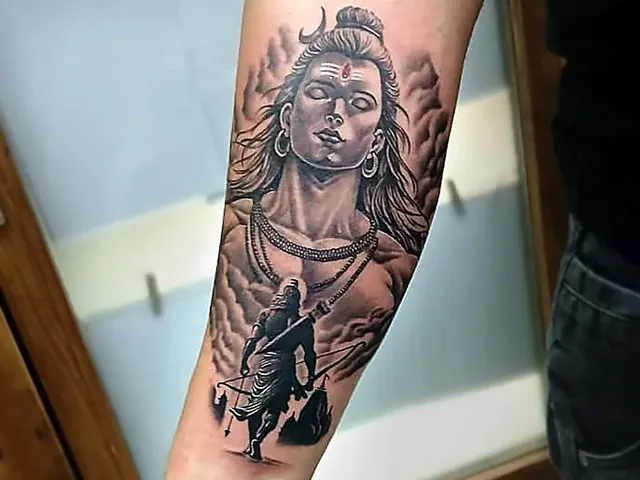
Indian Traditional & Spiritual Tattoos
Explore service Read the guide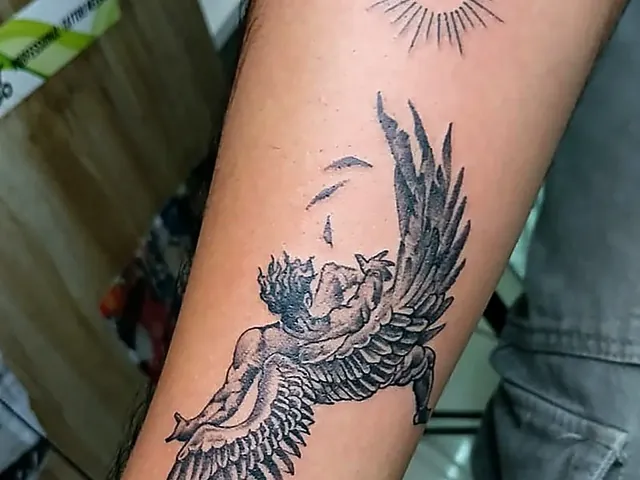
Realism & 3D Tattoos in Brookefield
Explore service Read the guide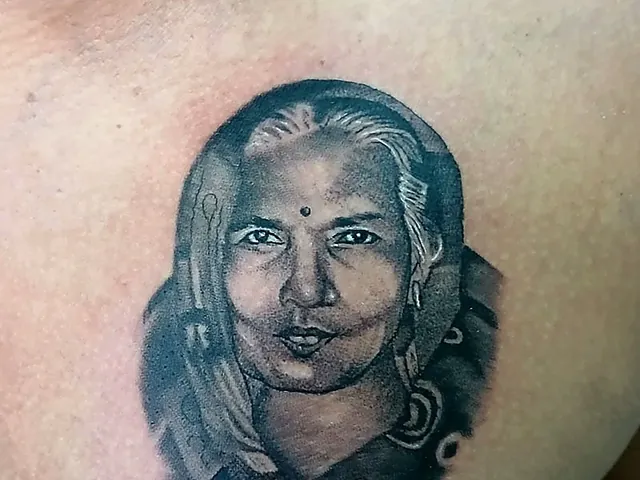
Portrait & Memorial Tattoos, Bangalore
Explore service Read the guide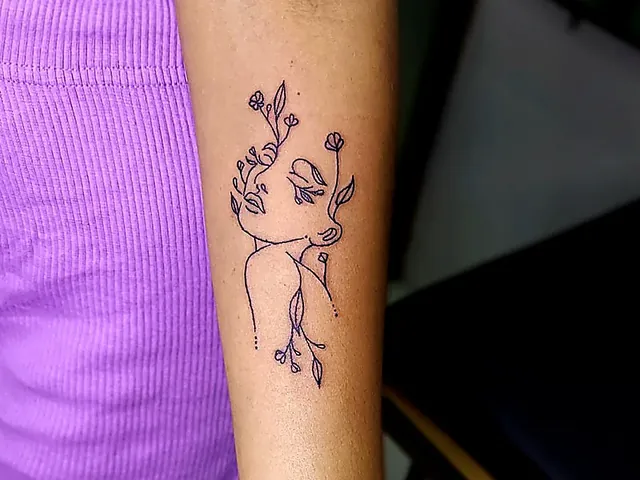
Fine Line & Minimalist Tattoos, AECS Layout
Explore service Read the guide