
Tattoo on Brown Skin: Indian Skin Tone Ink and Healing Tips
Key takeaways
- Tattoo ink sits under your skin, so your natural tone affects how every colour looks.
- Black, deep reds, blues, greens and purples usually show well on Indian skin tones.
- Strong contrast and slightly bolder lines keep designs clear over time.
- If you've had keloids or pigmentation problems, consult a dermatologist first.
- Sun protection after healing matters for every skin tone.
On this page
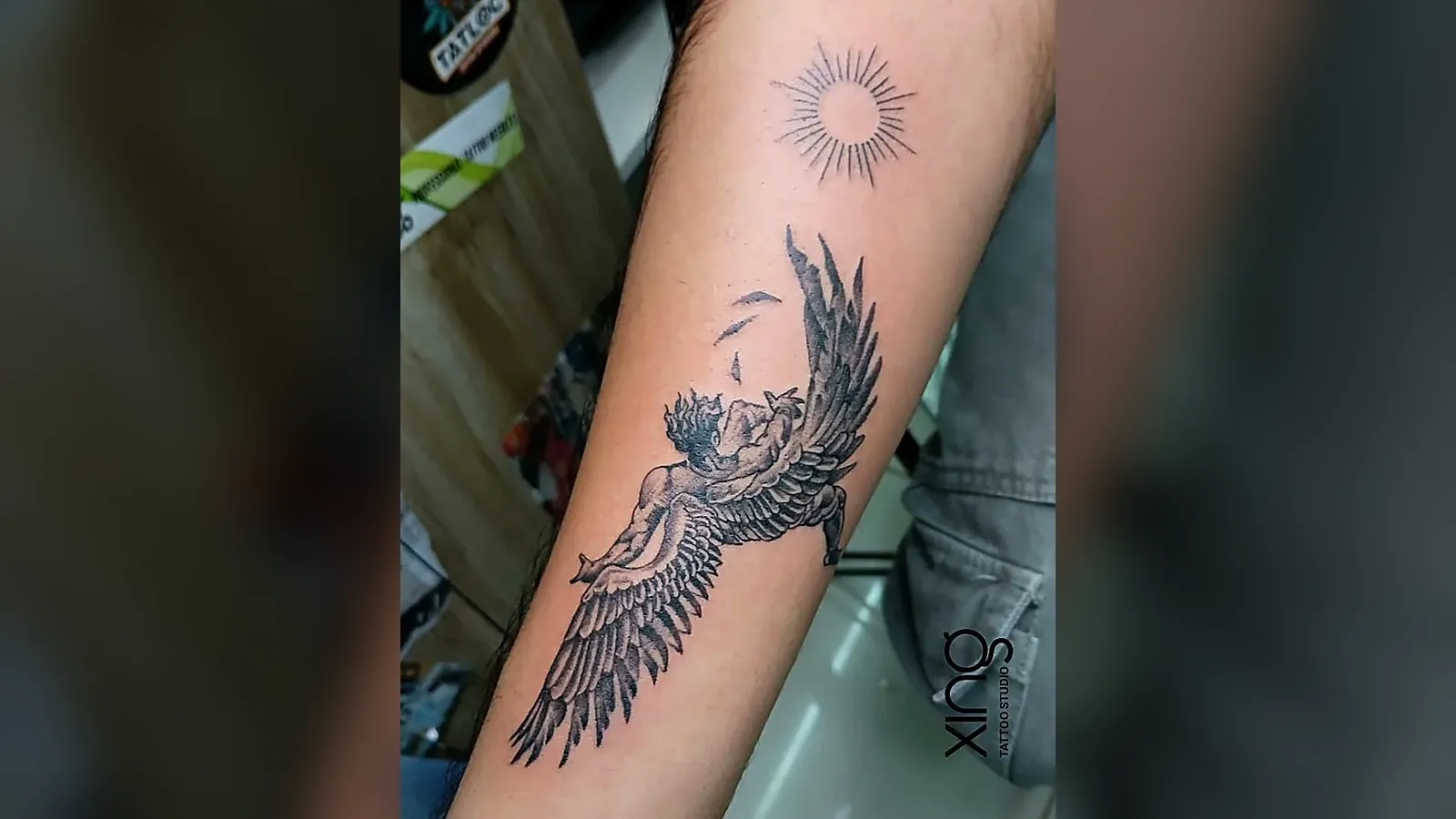
A tattoo on brown skin can look stunning. The secret is choosing a design with strong contrast, colours that show through your natural tone, and an artist who understands how ink settles in melanin-rich skin.
Most of our clients in Brookefield and across Bengaluru have Indian skin tones, from light wheatish to deep brown. Every one of them can have a beautiful tattoo — the planning just has to account for their skin.
This guide explains how ink sits in your skin, which colours show best, and how to heal well.
How ink sits in a tattoo on brown skin
Tattoo ink is placed in the dermis, the layer just under the top layer of your skin (the epidermis). Once healed, you see the ink through that top layer.
Melanin — the pigment that gives skin its colour — lives in the top layer. The more melanin you have, the more the top layer acts like a tinted filter over the ink.
That means:
- Dark inks like black show clearly on every skin tone.
- Deep, rich colours usually show well on medium and deeper skin.
- Light, pale colours can look subtle, muted or barely visible on deeper skin.
None of this is a limitation on creativity. It's simply information that helps you and your artist choose well.
Tattoo colours for dark skin that show best
Here is a general guide to tattoo colours on dark skin and medium Indian skin tones. Everyone's skin is unique, so treat it as a starting point.
| Colour | How it usually shows on medium to deep skin |
|---|---|
| Black | Clear and strong on all skin tones |
| Grey shading | Shows well with strong contrast |
| Deep red / maroon | Rich and visible |
| Royal blue / navy | Shows well |
| Emerald / dark green | Shows well |
| Purple | Shows well when saturated |
| Orange | Warm and visible on many tones |
| Yellow | Often subtle |
| Pastel pink / light blue | Often subtle |
| White | Very subtle; best as small highlights |
Contrast and line weight
Contrast is the difference between the darkest and lightest parts of a tattoo. On deeper skin tones, the "lightest" part is your natural skin colour — so the design needs dark areas and open skin areas that clearly separate.
What helps:
- Bold, confident outlines that frame the design.
- Deep blacks in shadows.
- Open skin left for highlights instead of very pale shading.
- Slightly larger sizes so details don't merge.
What to be careful with:
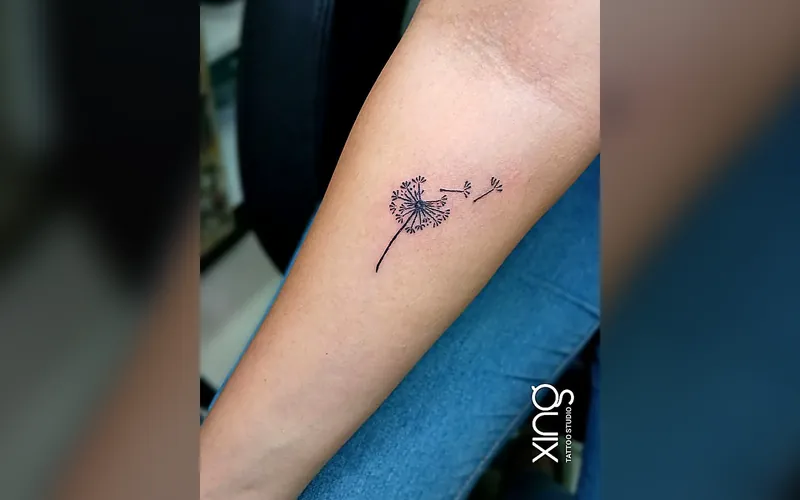
- Very fine, light lines that may soften quickly.
- Designs that rely entirely on pale shading.
- Tiny lettering with letters close together.
Peace's tip: On deeper skin, I often leave more open skin as the "highlight" rather than using white ink. It looks more natural and holds better over the years.
Black and grey on Indian skin
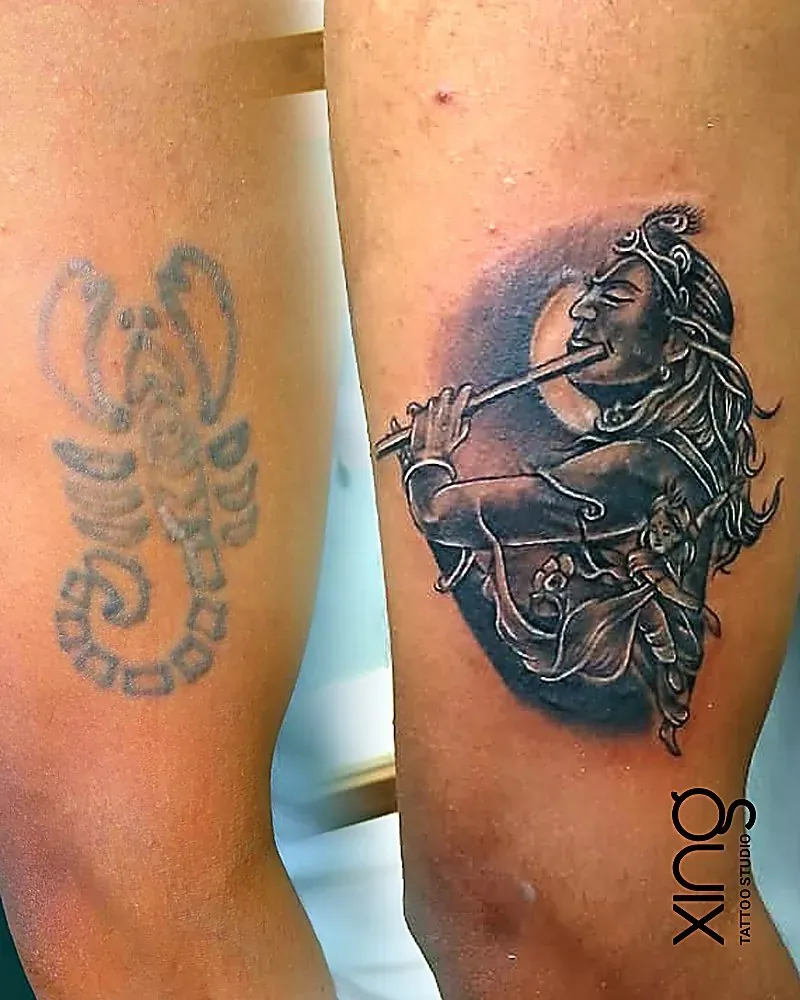
Black and grey work is one of the most reliable choices for Indian skin tones. It shows clearly, ages gracefully and suits almost any subject — portraits, deities, animals, florals and script.
If you want a bit of colour, consider deep accents: a red flower, a blue eye or a green leaf in an otherwise black and grey design. Our guide to black and grey vs colour tattoos explains how each style ages.
Keloids, hyperpigmentation and your skin
Some people are more likely to form keloids — raised, thick scars that grow beyond the original wound — or to develop darker or lighter patches after skin injury (hyperpigmentation or hypopigmentation). This can happen with any skin type, but some people with deeper skin tones are more prone to it.
Before you book, ask yourself:
- Have I had raised or thick scars after cuts, piercings or surgery?
- Do I get dark marks that last long after spots or injuries?
- Do I have any skin condition, such as eczema, psoriasis or vitiligo?
If the answer to any is yes, consult a dermatologist before getting tattooed. They can assess your skin and advise whether tattooing is suitable and which areas to avoid. A responsible artist may also suggest a small test area or a different placement.
The American Academy of Dermatology notes that skin reactions to tattoos can appear months or even years later, and recommends seeing a board-certified dermatologist for raised, itchy or bumpy changes.
Sun protection
Sun is the biggest cause of tattoo fading on every skin tone. It's easy to assume darker skin doesn't need sunscreen, but tattoos do.
- Keep a healing tattoo completely covered from direct sun.
- Once healed, apply a broad-spectrum sunscreen to exposed tattoos every day.
- Cover arm tattoos with light sleeves on long rides.
Healing on Indian skin
Healing is similar for all skin tones, but a few things are worth knowing.
- Redness may look darker or purplish on deeper skin, rather than pink.
- Temporary darkening around the lines can happen while healing and usually settles.
- Peeling flakes may look darker than the final tattoo.
- Picking can cause marks that take a long time to fade, so never pick or scratch.
Follow your artist's aftercare carefully. Our tattoo aftercare guide covers the full 30-day routine.
Watch for signs of infection — spreading redness or darkness, increasing pain, pus or fever — and see a doctor promptly if they appear.
Choosing designs that flatter your skin
Some styles look especially good on Indian skin tones:
- Black and grey realism — deities, portraits, animals.
- Bold lettering — names and words with clear spacing.
- Geometric and mandala work — strong lines and dotwork.
- Indian traditional designs — Om, trishul, lotus, Shiva and Ganesha.
- Colour florals in deep shades — red roses, blue lotus, green leaves.
Our Indian traditional tattoo guide covers spiritual designs in detail.
Questions to ask your artist about your skin tone
- Which colours in my design will show clearly on my skin?
- Should any lines be bolder so they stay sharp?
- Where should I leave open skin instead of pale shading?
- Can you show me healed work on a similar skin tone?
Related guides: Thinking about a light, delicate design? Read our honest guide to white ink tattoos on Indian skin tones, and vegan vs traditional tattoo inks if you have sensitive skin.
How we do it at Xing
At Xing in AECS Layout, nearly every client has an Indian skin tone, so we plan every design around it. Peace looks at your skin during the free consultation and suggests contrast, line weight and colours that will show clearly once healed.
Inks are sealed and skin-tested, needles are single-use and opened in front of you, and you leave with clear aftercare guidance. If you have a history of keloids or skin conditions, we'll ask you to check with a dermatologist first.
Conclusion
A tattoo on brown skin can be bold, beautiful and long-lasting. Choose strong contrast, colours that show through your natural tone, and an artist who plans around your skin. Protect it from the sun, heal it carefully, and it will look great for years.
If you're in Brookefield, Whitefield or Marathahalli and want honest advice for your skin tone, come in for a free consultation. You can also see our black and grey tattoo work or browse the tattoo gallery.
Ready to talk about your idea? Book a free consultation at Xing on the First Floor of SV Plaza, above DMART Ready, AECS Layout, Brookefield — or WhatsApp us.
Frequently asked questions

Written by
Peace
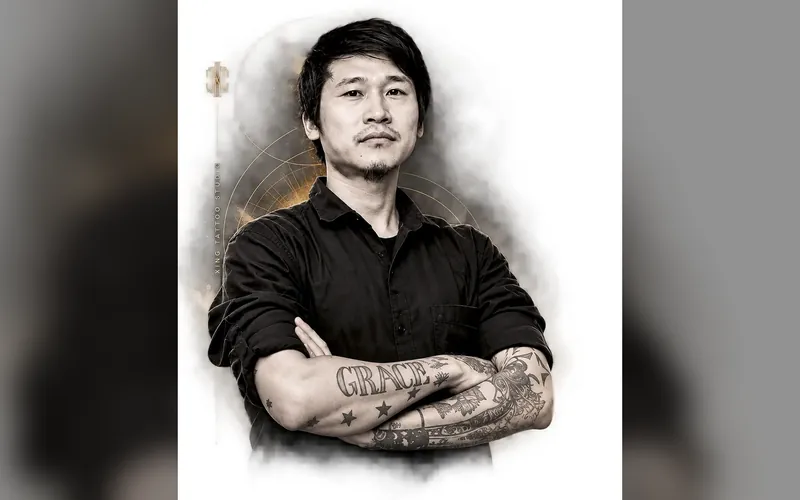
Lead Artist at Xing, Brookefield, with 15+ years of experience. Every consultation, design and session at the studio is handled by Peace personally.
Meet Peace
Share this guide
WhatsAppKeep reading
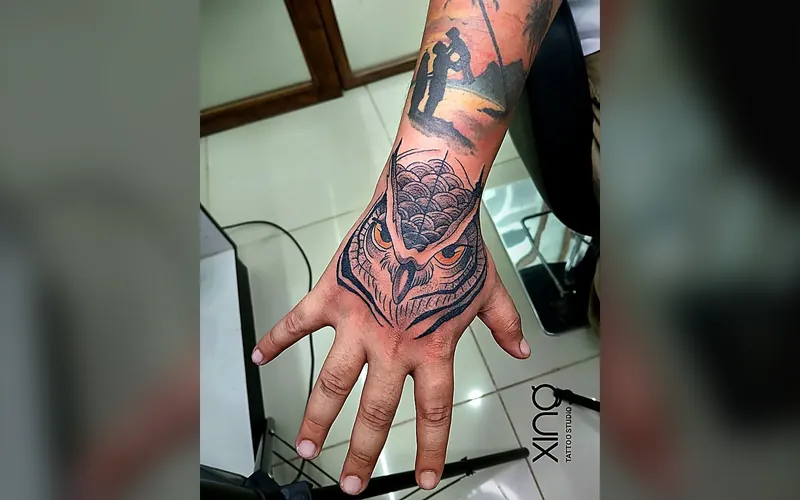
Signature Tattoo Services in Brookefield, Bangalore
Custom work by Peace at our AECS Layout studio — serving Brookefield, Marathahalli, Whitefield and East Bengaluru.
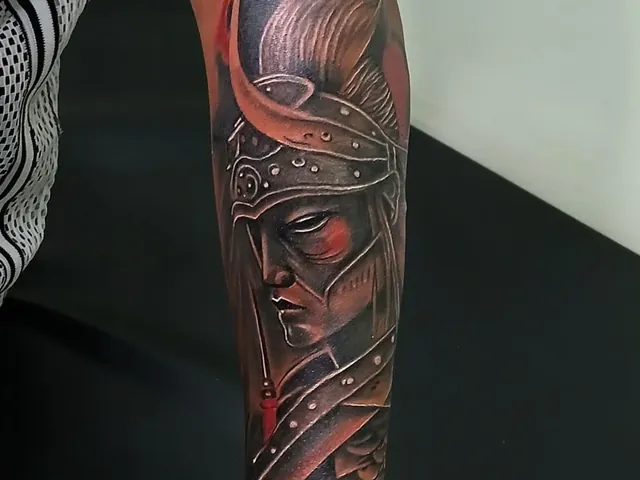
Black & Grey Tattoos near Whitefield
Explore service Read the guide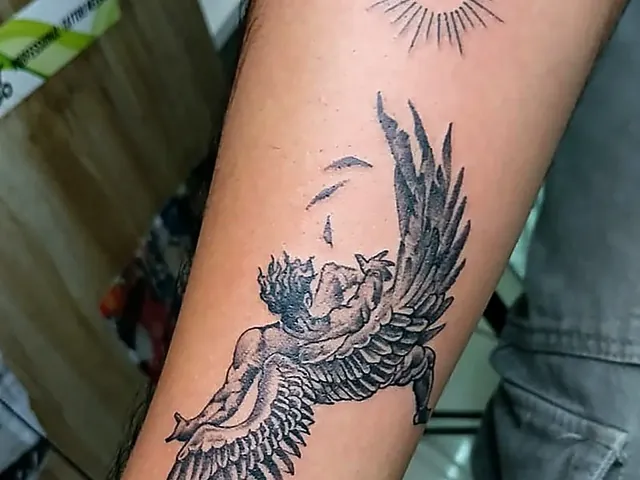
Realism & 3D Tattoos in Brookefield
Explore service Read the guide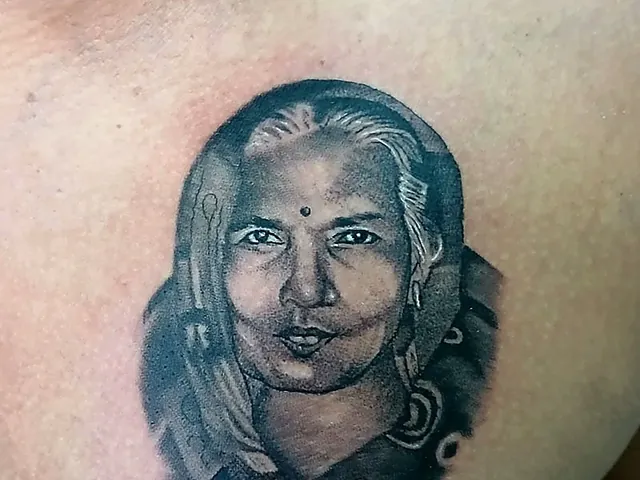
Portrait & Memorial Tattoos, Bangalore
Explore service Read the guide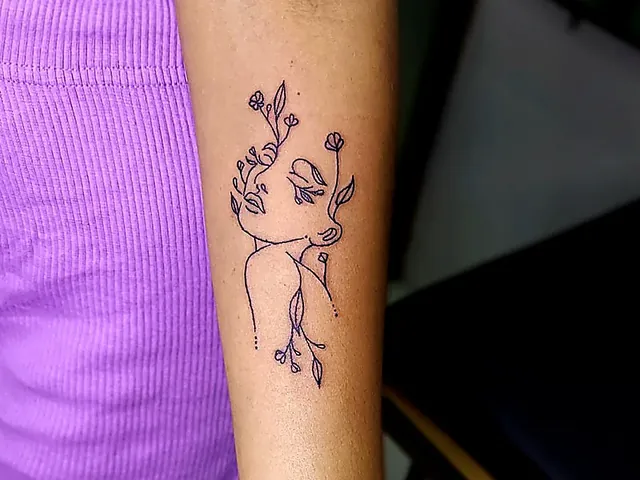
Fine Line & Minimalist Tattoos, AECS Layout
Explore service Read the guide