
Safe Tattoo Needles: Cartridges, Sterilisation and Standards
A safe tattoo needle is sterile, single-use and sealed until it's opened in front of you, whether it comes as a traditional needle or a cartridge. It's used for one client only and disposed of in a sharps container. Around it, the machine, cables and workstation should be covered in fresh barrier film, and reusable tools should be properly sterilised.
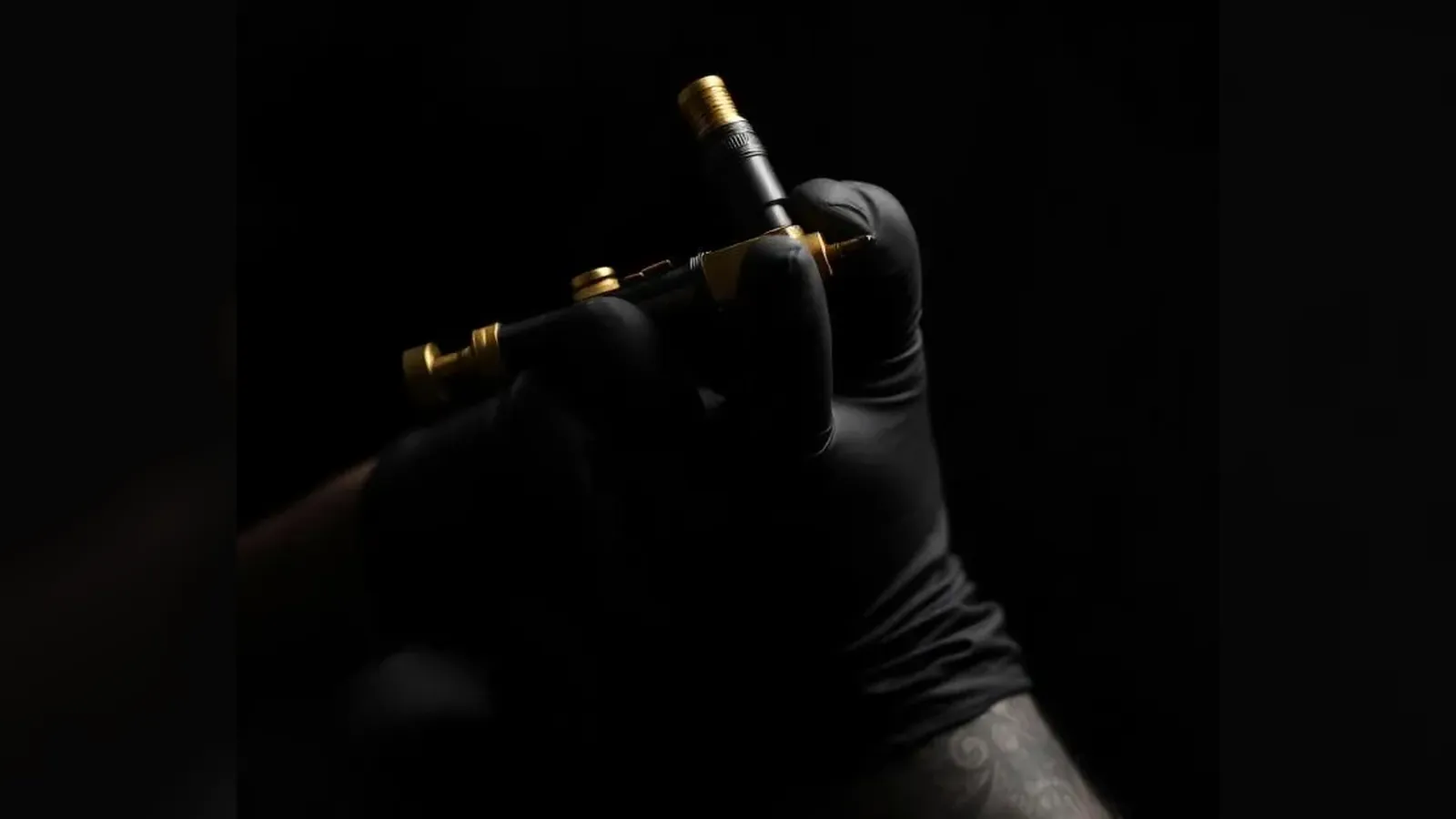
Key takeaways
- Needles must be sterile, sealed, single-use and opened in front of you — never reused.
- Cartridges and traditional needles can both be safe; what matters is that they're sterile and single-use.
- Barrier film on the machine, cables, bottles and workstation stops cross-contamination.
- Reusable tools need proper sterilisation; single-use items go straight into the bin or sharps container.
- You can check any studio's hygiene yourself — watch the setup and ask questions.
On this page
When you're nervous about a tattoo, it's rarely the design that worries you most. It's the needle. Is it clean? Is it new? Has it been used on someone else? Those are exactly the right questions to ask — and a good studio will be glad you asked them.
This guide explains what makes a safe tattoo needle: the difference between cartridges and traditional needles, what sterile and single-use really mean, why barrier film matters, and how to check any studio's hygiene yourself. For a broader studio hygiene checklist, see our hygienic tattoo studio checklist. This post zooms in on the needle and everything it touches.
What makes a safe tattoo needle?
A safe tattoo needle is sterile, sealed, single-use and opened in front of you. It's used on one client only, then disposed of safely in a sharps container.
The four non-negotiables:
- Sterile — manufactured and packaged sterile.
- Sealed — the package is intact until your session starts.
- Single-use — used for one client only, never reused.
- Opened in front of you — so you can see it's new.
If any one of these is missing, the needle isn't safe — no matter how clean the studio looks.
What's the difference between cartridges and traditional needles?
A cartridge is a needle sealed inside a plastic housing that clicks into a compatible machine. A traditional needle is soldered to a metal bar and used with a tube and grip. Both can be safe if they're sterile and single-use.
| Needle cartridge | Traditional needle and bar | |
|---|---|---|
| How it's built | Needle inside a plastic housing | Needle soldered onto a bar |
| Changing needles | Quick click-in, click-out | Needle and tube set up together |
| Contamination control | Many have a membrane to limit backflow | Relies on single-use tubes or proper sterilisation |
| Safety requirement | Sterile, sealed, single-use | Sterile, sealed, single-use |
| What you should see | Sealed package opened in front of you | Sealed package opened in front of you |
The type of needle matters much less than how it's handled. A cartridge that's been reused is unsafe; a traditional needle that's sterile and single-use is safe.
What does "single-use" really mean?
It means one needle, one client, one session — then disposal. A single-use needle is never cleaned and reused, not even on the same person on another day.
What happens to a single-use needle after your session:
- It's removed from the machine.
- It goes straight into a sharps container.
- The sharps container is disposed of as medical waste.
At Xing Premium Tattoo Studio in Brookefield, every needle is single-use and opened in front of you.
Why does barrier film matter?
Because during a session, gloved hands touch the machine, cables, bottles and surfaces. Barrier film covers all of them, then gets thrown away, so nothing from one client reaches the next.
Where barrier film should be:
- On the tattoo machine and grip.
- On the cables and clip cords.
- On spray bottles and ink bottles.
- On the work surface and tray.
- On any lamp or control the artist touches.
At Xing, barrier film covers the machine, cables, bottles and workstation, and the station is fully cleaned and re-wrapped between every client.
How are reusable tools sterilised?
Anything that isn't single-use must be cleaned and then sterilised with appropriate equipment before it's used again. Cleaning removes dirt; sterilisation kills what you can't see.
The difference matters:
- Cleaning — washing away visible ink, blood and residue.
- Disinfection — reducing germs on surfaces.
- Sterilisation — destroying all microorganisms, including spores.
Needles should never be in the "reusable" category. At Xing, reusable tools go through medical-grade sterilisation, and single-use items are thrown away after each client.
Peace's tip: Ask me anything about hygiene — what's single-use, what's sterilised, how the station is wrapped. I'd much rather you ask and feel relaxed than sit in the chair worrying.
What about gloves, ink caps and the rest of the setup?
The needle is only safe if everything around it is clean too. Fresh gloves, single-use ink caps and a clean, wrapped station all matter.
What a safe setup includes:
- Fresh gloves, changed whenever the artist touches anything outside the work area.
- Ink poured into fresh caps for you, never back into the bottle.
- Sealed ink bottles from a reputable brand.
- A clean, uncluttered workstation.
- A sharps container within reach.
Our guide to vegan vs traditional tattoo inks explains what makes ink safe as well.
How can I check any studio's hygiene?
Watch the setup and ask questions. You don't need special knowledge — just pay attention to what's opened, what's wrapped and what's thrown away.
Your hygiene check, step by step:
- Look at the workstation before you sit down.
- Watch the needle package being opened.
- Check that surfaces and equipment are wrapped.
- Watch the artist put on fresh gloves.
- See that ink is poured into fresh caps.
- Ask how reusable tools are sterilised.
- After your session, notice the needle going into a sharps container.
Walk away if you see:
- A needle already unwrapped or out of its package.
- Ink poured back into a bottle.
- Unwrapped machines or cables.
- Dirty or cluttered surfaces.
- An artist who gets defensive about hygiene questions.
What needle groupings are used for different tattoos?
Different jobs need different needle configurations — but every one of them should still be sterile and single-use. The grouping changes the mark; it never changes the safety rules.
Common needle types:
- Round liners — tightly grouped needles for clean outlines and fine lines.
- Round shaders — loosely grouped needles for soft shading.
- Magnums — needles in rows for smooth shading and colour fills.
- Curved magnums — rounded rows for gentler blending on skin.
A single tattoo can use several types: a liner for the outline, then a shader or magnum for depth. Each one is opened fresh for your session and thrown away afterwards.
Does a fresh needle hurt less?
A new, sharp needle moves through skin cleanly. Fresh needles are part of what makes a session as comfortable and clean as possible — one more reason never to accept anything less than a sealed, single-use needle. Our tattoo pain chart explains how placement affects how a tattoo feels.
Can a safe needle still lead to infection?
The risk is much lower with sterile, single-use equipment, but aftercare matters too. A new tattoo is an open wound, and how you look after it decides how it heals.
- Wash your hands before touching the tattoo.
- Clean it gently as instructed.
- Keep it out of pools, the sea and saunas while healing.
- See a doctor if you notice spreading redness, pus, red streaks, worsening pain or fever.
Our tattoo aftercare guide and our guide to infected tattoo signs explain what's normal and what isn't.
Why does a clean setup matter for first-timers?
Because first-timers are often most anxious about safety. Seeing the needle opened and the station wrapped makes the whole experience calmer — and a calmer client makes for an easier session.
If it's your first tattoo, our first tattoo guide for Bengaluru walks you through the day step by step.
What should I do if something feels wrong?
Leave, or ask the artist to stop. You don't owe anyone a tattoo. A good studio will always answer questions and never rush you past a hygiene concern.
If you've had a tattoo somewhere and are worried about hygiene afterwards, speak to a doctor about whether any tests are advisable.
How we do it at Xing
At Xing, First Floor, SV Plaza, 267, 60 Feet Road, Above DMART Ready, AECS Layout, Brookfield, Bengaluru, Karnataka 560037, India, this is our hygiene standard for every client:
- Single-use, disposable needles — opened in front of you.
- Sealed, skin-tested inks imported from the US.
- Medical-grade sterilisation for every reusable tool.
- Barrier film on the machine, cables, bottles and workstation.
- Workstation fully cleaned and re-wrapped between every client.
Every session is done by Peace personally, with 15+ years of experience. You can read more on the tattoo artist page, see our standards on the about page, or browse our tattoo services.
Conclusion: safe needles, calm sessions
A safe tattoo needle is sterile, sealed, single-use and opened in front of you — whether it's a cartridge or a traditional needle. Around it, barrier film, fresh gloves, single-use ink caps and proper sterilisation complete the picture. Watch the setup, ask questions, and choose a studio that's happy to show you everything.
For more quick answers, visit our FAQ page.
Ready to talk about your idea? Book a free consultation at Xing on the First Floor of SV Plaza, above DMART Ready, AECS Layout, Brookefield — or WhatsApp us.
Frequently asked questions

Written by
Peace
Lead Artist at Xing, Brookefield, with 15+ years of experience. Every consultation, design and session at the studio is handled by Peace personally.
Meet PeaceShare this guide
WhatsAppKeep reading
Signature Tattoo Services in Brookefield, Bangalore
Custom work by Peace at our AECS Layout studio — serving Brookefield, Marathahalli, Whitefield and East Bengaluru.
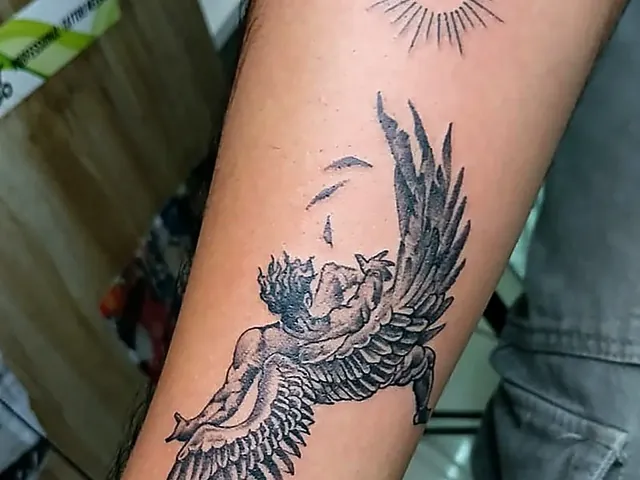
Realism & 3D Tattoos in Brookefield
Explore service Read the guide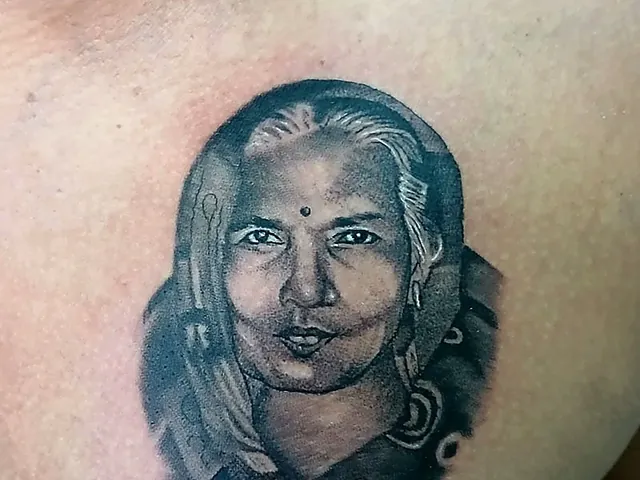
Portrait & Memorial Tattoos, Bangalore
Explore service Read the guide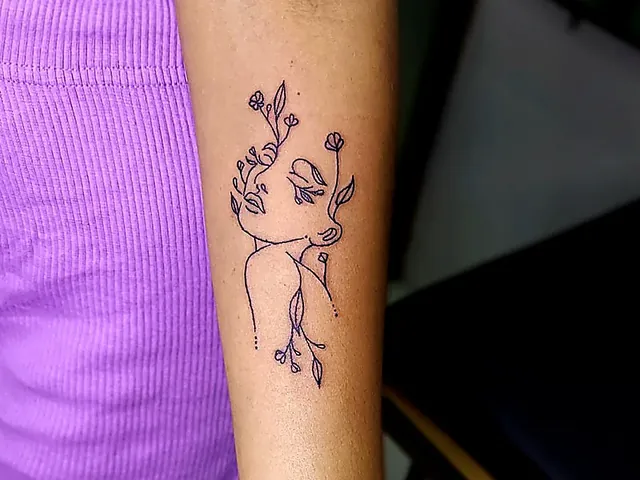
Fine Line & Minimalist Tattoos, AECS Layout
Explore service Read the guide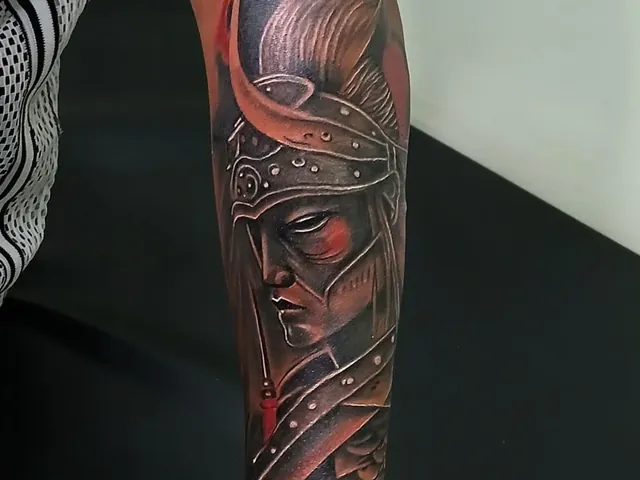
Black & Grey Tattoos near Whitefield
Explore service Read the guide